Surgery or laser for an ingrown toenail?
Not every ingrown toenail has to be operated on or lasered. Which treatment is sensible depends on the findings.
Not every case is the same
Mild pressure at the nail edge is something different from a severe inflammation. Acute complaints can often be classified differently from chronic, recurring courses.
Granulation tissue, pus or severe pain rather suggest a medical assessment. Which treatment fits in an individual case depends on the findings.
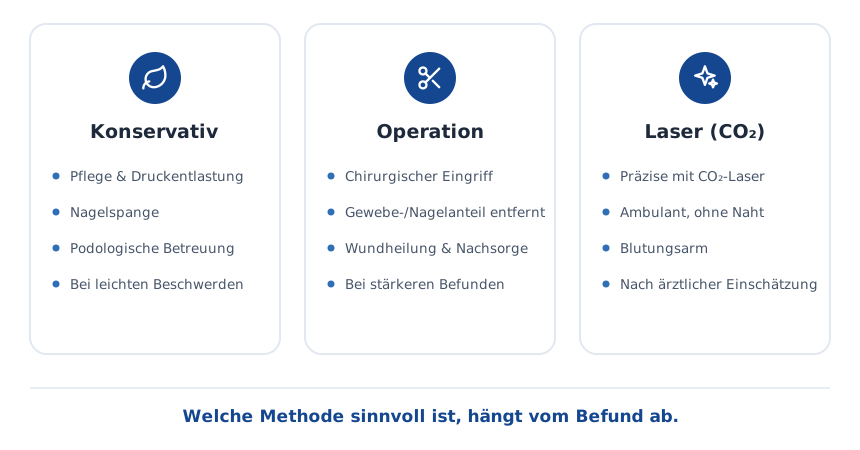
Conservative treatment
- care
- pressure relief
- tamponades
- nail brace
- podiatric treatment
Conservative measures can be sensible with mild or early complaints.
Classic medical treatment / surgery
With stronger or recurring complaints, a medical procedure may be necessary. Depending on the method, tissue or a portion of the nail can be removed or treated. The aim is to relieve the painful nail edge. The procedure and aftercare depend on the method and the findings.
Laser treatment
- the CO₂ laser can treat tissue precisely
- possible on an outpatient basis
- can be low in bleeding
- no sutures to be removed
- a self-pay service at Nagelneu Laser
More details on the page Laser treatment.
Comparison table
| Criterion | Conservative | Classic surgery | Laser |
|---|---|---|---|
| Suitable for | mild complaints | possible for stronger or recurring complaints | medically indicated findings, depending on the assessment |
| Type of procedure | no surgery | medical procedure | precise treatment with the CO₂ laser |
| Setting | often podiatric care | wound healing and aftercare depending on the method | outpatient |
| Cost coverage | effect depends on the findings | statutory coverage possible depending on medical necessity | self-pay service at Nagelneu Laser, costs explained beforehand |
These statements are general and do not replace a medical assessment.
When should you seek a medical assessment?
- severe pain
- pus
- marked inflammation
- granulation tissue
- recurring complaints
- diabetes, circulatory disorders or at-risk feet
- uncertainty about the right approach
Frequently asked questions
Further information
You can submit a photo check in advance.