Ingrown Toenail:
Causes, Symptoms & Treatment
An ingrown toenail can cause considerable pain and noticeably affect everyday life. In this guide you will learn how it develops, which symptoms are typical and which treatment options exist.
Contents
What is an ingrown toenail?
An ingrown toenail — medically onychocryptosis (Unguis incarnatus) — describes a condition in which the lateral edge of the nail grows into the surrounding soft tissue. The big toe is most commonly affected, particularly the lateral nail fold.
Once the edge of the nail pierces the skin or exerts lasting pressure on the tissue, a local irritation develops, which — if not treated adequately — can become inflamed or chronic.
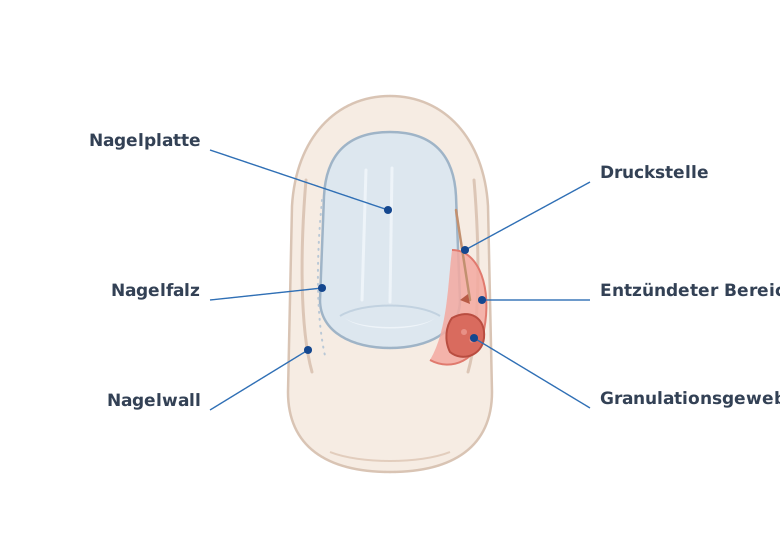
Typical causes
Ingrown toenails are rarely caused by a single trigger. Several factors often act together:
Cutting the nails incorrectly
Cutting too short or rounding the corners is the most common cause. The nail grows into the tissue at the sides when the corners are not left straight.
Tight or pressing footwear
Shoes with a narrow toe box exert lateral pressure on the nail and encourage ingrowth.
Inherited nail shape
A naturally more curved or broad nail plate can raise the risk, independent of footwear or cutting technique.
Sport and physical strain
Repeated pressure while running, playing football or during other sports can encourage or accelerate ingrowth.
Excessive sweating / moist skin
Softer skin tissue due to moisture offers the nail edge less resistance and can make it easier for the nail to penetrate.
Improper self-treatment
Attempts to correct the nail with home remedies or by cutting around it often make the problem worse.
Symptoms & complaints
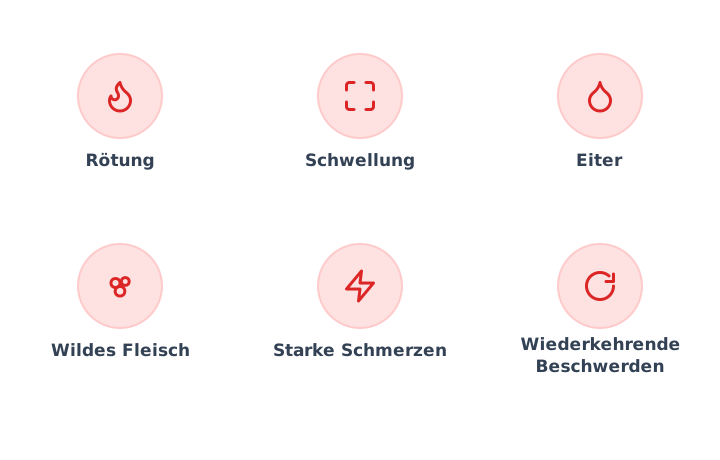
The complaints vary depending on severity and course. Typical signs are:
How it develops
Ingrown toenails can develop very differently. Broadly, the following courses can be distinguished:
Early irritation
Mild pressure pain and occasional redness. The tissue is not yet inflamed. At this stage improvement is possible by adjusting cutting technique and footwear.
Inflammatory course
Clear swelling, redness and pressure pain. The tissue reacts to nail pressure with inflammation. Podiatric measures or a medical assessment are advisable.
Chronic or recurring problem
The problem keeps returning despite treatment. There is often an underlying issue with the shape or width of the nail, for which a longer-term treatment approach may be sensible.
More pronounced inflammation
Marked inflammation, possibly with tissue changes or discharge of pus. Medical treatment is advisable in this course.
When should you seek a medical assessment?
Not every ingrown toenail requires medical help straight away. There are, however, situations in which an assessment is advisable. If you have pre-existing conditions such as diabetes, particular caution is needed.
Treatment options at a glance
The suitable treatment depends on the course, the severity and individual factors. In principle there are several approaches:
Watch and relieve pressure
With very early, mild irritation without inflammation, adjusting footwear, cutting the nail correctly and relieving pressure can be sufficient.
Podiatry / medical foot care
In early or milder cases, podiatrists can help with nail-correcting braces, pressure-relieving measures and proper nail treatment.
Conservative medical measures
Depending on the findings, doctors can use various non-surgical measures to correct or relieve the ingrowth.
Surgical procedures (e.g. wedge resection / Emmert plasty)
In certain cases a classic surgical procedure may be sensible or necessary. It is, as a rule, associated with a longer healing time.
CO₂ laser treatment
A minimally invasive method in which a fine CO₂ laser pen precisely treats the inflamed tissue and, depending on the findings, the affected nail root — without an incision, without sutures, usually in a single appointment.
Which measure is suitable in an individual case cannot be answered in general without an individual assessment. Talk to a specialist physician or podiatrist. You will find a direct comparison of the methods under surgery or laser; details on the CO₂ laser treatment, on risks & informed consent as well as on aftercare & healing are covered on separate pages.
When can podiatry be sensible?
Podiatry can help with:
Medical assessment for:
Different circumstances apply depending on your situation in life. You will find more in-depth information for individual groups — from children to athletes to people with diabetes — in the further topics at the end of this page.
Common self-treatment mistakes
Many people first try to solve the problem themselves. Some measures, however, can make the problem worse or encourage inflammation:
Cutting the nails too short or too round
As it grows back, the nail grows into the tissue again.
Trying to "dig under" the nail with instruments
Tissue injuries, risk of infection.
Ignoring pressure pain over a longer period
An early irritation can develop into an inflammation.
Improper home remedies
Can irritate the tissue without resolving the underlying problem.
Seeking medical assessment too late when inflamed
Inflammations can spread and require a more involved treatment.
What does treatment at Nagelneu Laser look like?
We take an individual approach to every patient. There is no standard path that suits everyone. You will be treated by our medical team of specialists. In principle, our procedure is as follows:
Enquiry or initial assessment
You submit an enquiry via our form or book directly via Doctolib. Optionally, you can send in a photo of the affected area.
Individual assessment
Our team reviews your details and gives you an initial assessment before an appointment is arranged.
Appointment in Frankfurt
The procedure itself takes place on an outpatient basis at our practice in Frankfurt am Main, Germany. We treat under local anaesthesia.
Aftercare
With the minimally invasive laser method, follow-up appointments for suture removal are, as a rule, not necessary. We give you clear instructions on aftercare.
Do you have questions about your situation?
Submit a treatment enquiry — a free initial professional assessment, without obligation — or book an appointment directly. We will get back to you individually.
Frequently asked questions
Note: This article is for general information and does not replace an individual medical consultation. In case of acute complaints, marked inflammation or discharge of pus you should see a doctor promptly. Sources include AWMF guidelines and specialist literature on onychocryptosis, as well as our own clinical experience from more than 10,000 treatments performed in the field of laser and nail surgery.